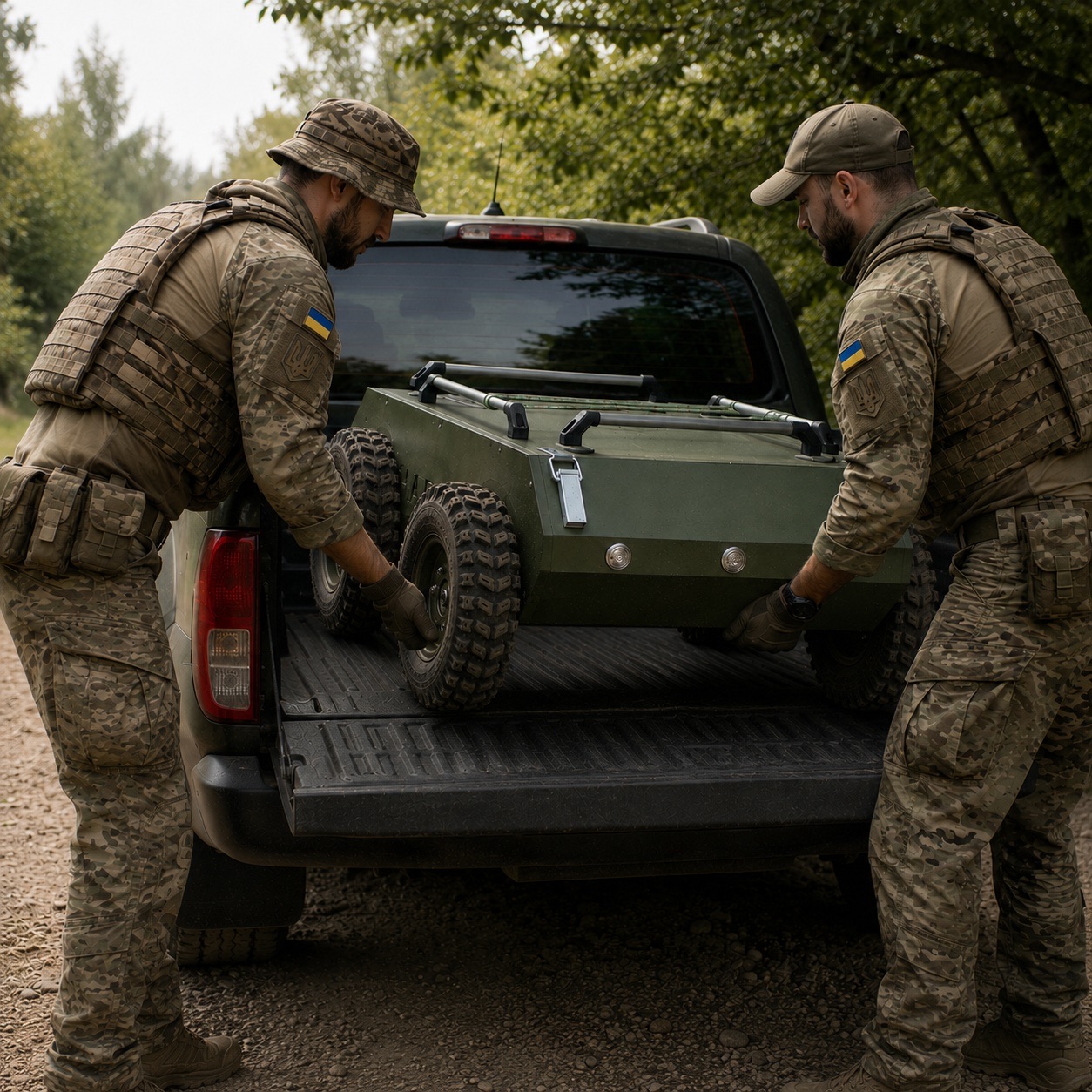
HARDY is organised around the flow of mission capability rather than isolated departments. A programme owner maintains the link between an operational need, technical configuration, production plan, test evidence and platform lifecycle.
Management principle
One mission — one accountable cross-functional team
Every solution passes controlled gates: need, architecture, prototype, production readiness, verification, release and field outcome.
Product and production cycle
Strategy and portfolio
Vision, programme priorities, scale-up financing, risk, legal and security frameworks.
Output: an aligned portfolio and resources.
Mission discovery and programmes
Work with units, foundations, partners and government customers to define requirements, scenarios and success criteria.
Output: a validated mission statement.
Systems engineering and R&D
Mechanical, electrical and power, embedded, autonomy, communications, payload integration and configuration documentation.
Output: a controlled technical configuration.
Prototype and industrialisation
DFM/DFA, tooling, routings, BOM control, work standards and preparation of production fixtures.
Output: a production-readiness package.
Supply chain and incoming quality
Supplier qualification, procurement, incoming inspection, inventory, traceability and critical-component control.
Output: a production-ready material set.
Production cells
Composite and CNC parts, chassis and drivetrain, wiring, systems integration and final assembly.
Output: a repeatable finished platform.
Quality, testing and release
In-process control, bench and field tests, software versions, acceptance criteria and evidence packages.
Output: a configuration cleared for delivery.
Delivery and lifecycle support
Logistics, training, field service, repairs, spares and structured feedback into the next engineering iteration.
Output: mission outcomes and a closed learning loop.
Cross-cutting enablers
What keeps the cycle connected
How the model scales
At an early stage, one person may cover several roles, but accountability for each function remains explicit. As volume grows, functions separate into teams without losing product, manufacturing or quality ownership between departments.