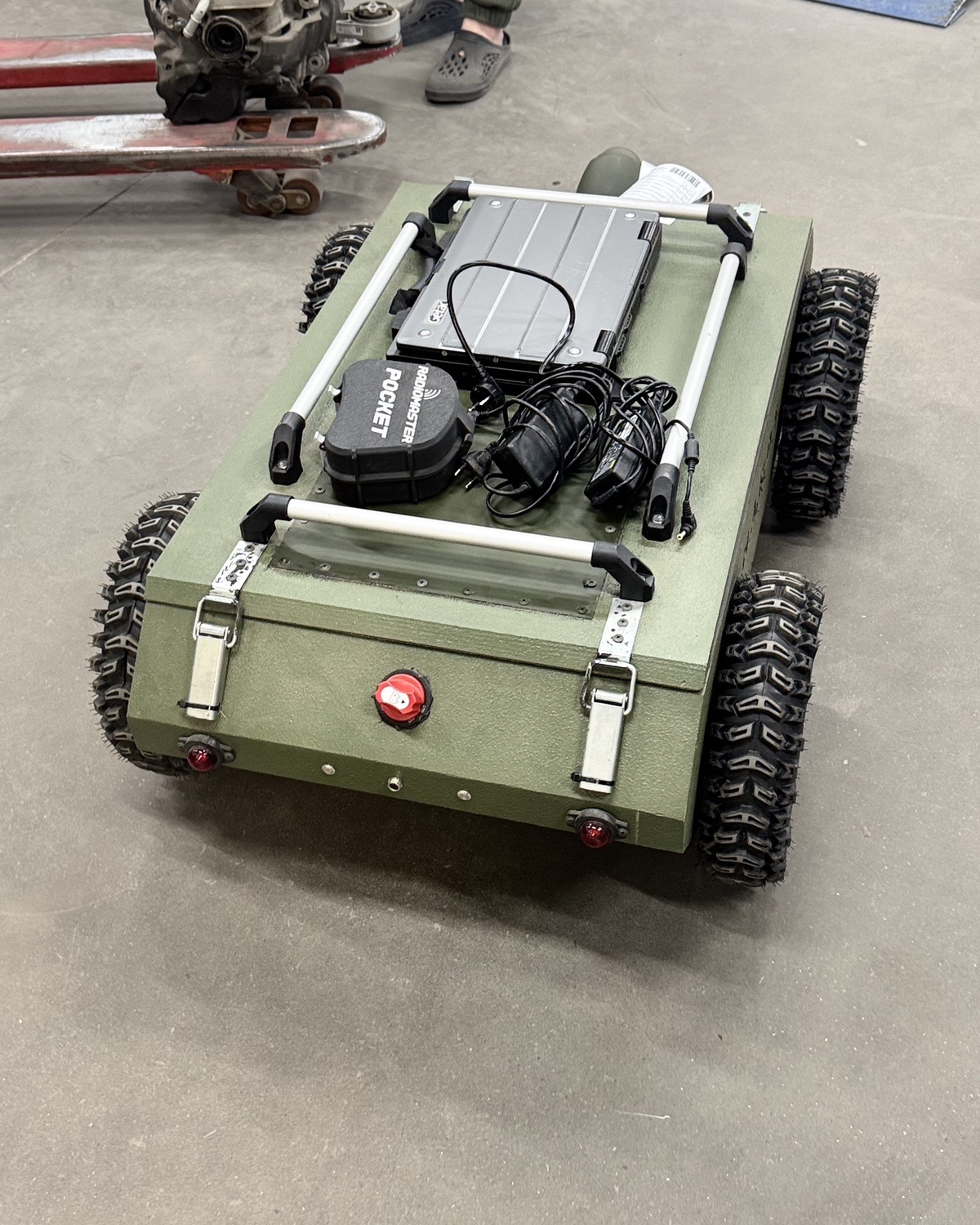
Human-in-command means the machine performs hazardous physical work while people retain defined decisions, intervention authority and responsibility. The level of automation should be described by function rather than the broad word “autonomy”.
Mission value
Waypoint movement, stabilisation, return and health monitoring can be automated to different degrees. Each function needs activation conditions, boundaries, failure behaviour and an understandable operator interface.
The HARDY solution
HARDY builds automation around observable system state, event logging and predictable transition to a safer mode. The operator should understand what the machine is doing and why.
What the user gains
Control is demonstrated through normal and degraded scenarios, not a presentation.
correct state and warning display;
operator intervention time and outcome;
behaviour after loss of a sensor, link or energy reserve.
Products and training
Control stations, software and operator training
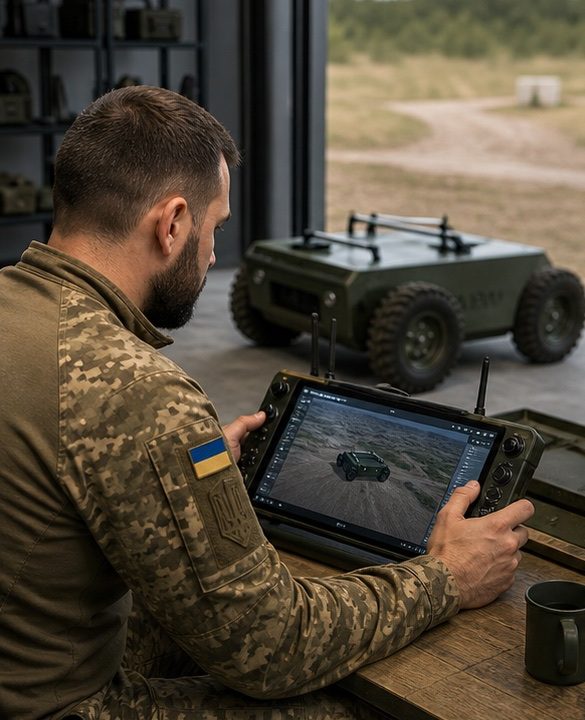
Choose a workstation, software product and course to connect system state, commands and decisions in one workflow.
Recommended products
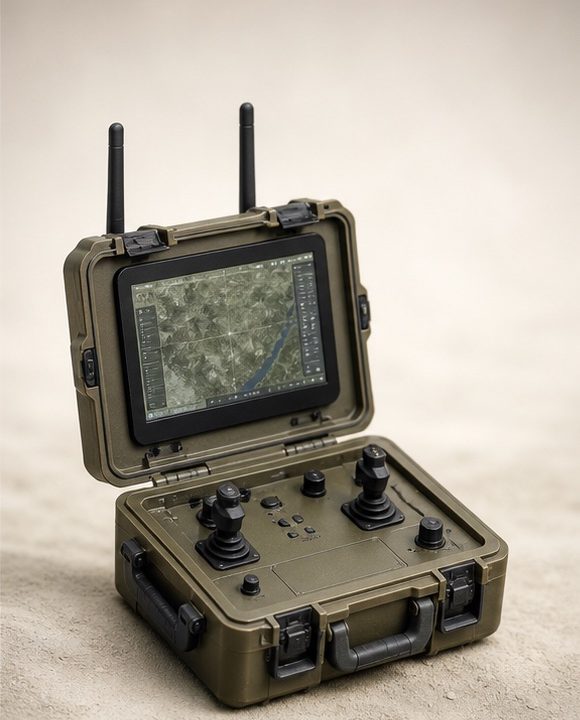
HARDY GCS COMPACT
Portable single-operator control station for one platform or a small sensor group.
Product details →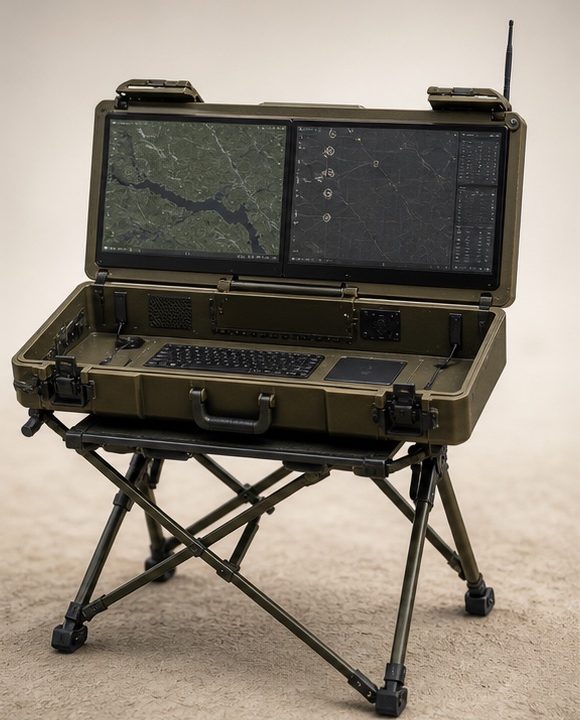
HARDY GCS FIELD
Two-display field workstation for longer missions, telemetry and event awareness.
Product details →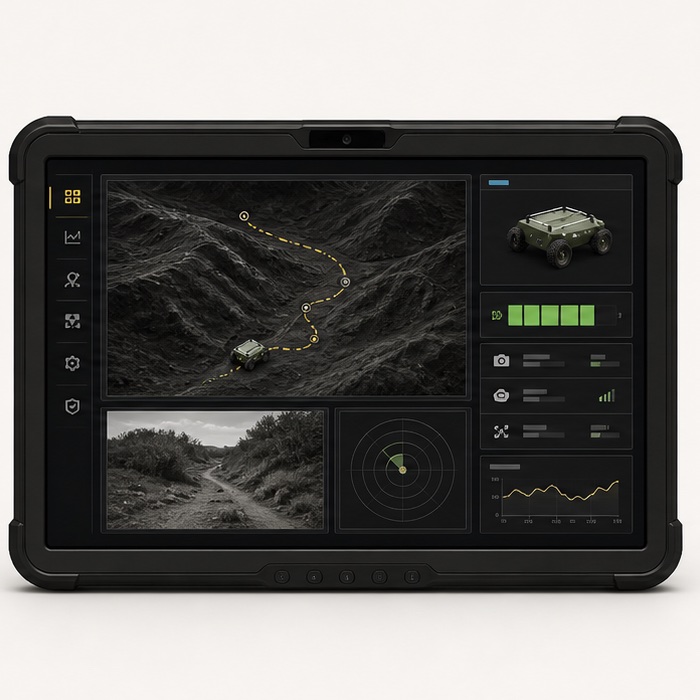
HARDY MISSION
Mission preparation, route control, telemetry and completion review in one interface.
Product details →Available configurations
Portable control
Compact station for one platform or a small sensor group.
Field workstation
Dual displays, extended power and multiple data streams.
Software loop
Mission planning, telemetry, event log and system health.
Recommended training
UGV Operator Fundamentals
Онлайн-курс оператора НРК: 10 модулів і 40 уроків про будову системи, підготовку, безпеку, навчальні завдання та перевірку результатів. Власний темп, тести й робочі матеріали.
2 400 ₴Course details →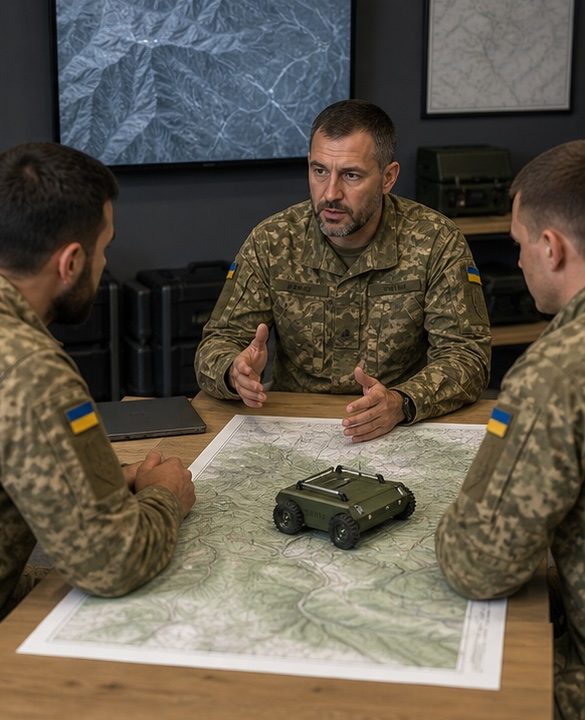
UGV Programme Leader
Capability portfolio, procurement, acceptance, training, service data and fleet scale-up.
5 900 ₴Course details →Next step
Choose a ready offer or send a technical brief.
For a ready solution, we will confirm the package, quantity and delivery path. For a different task, we will review the brief and propose the next engineering step.