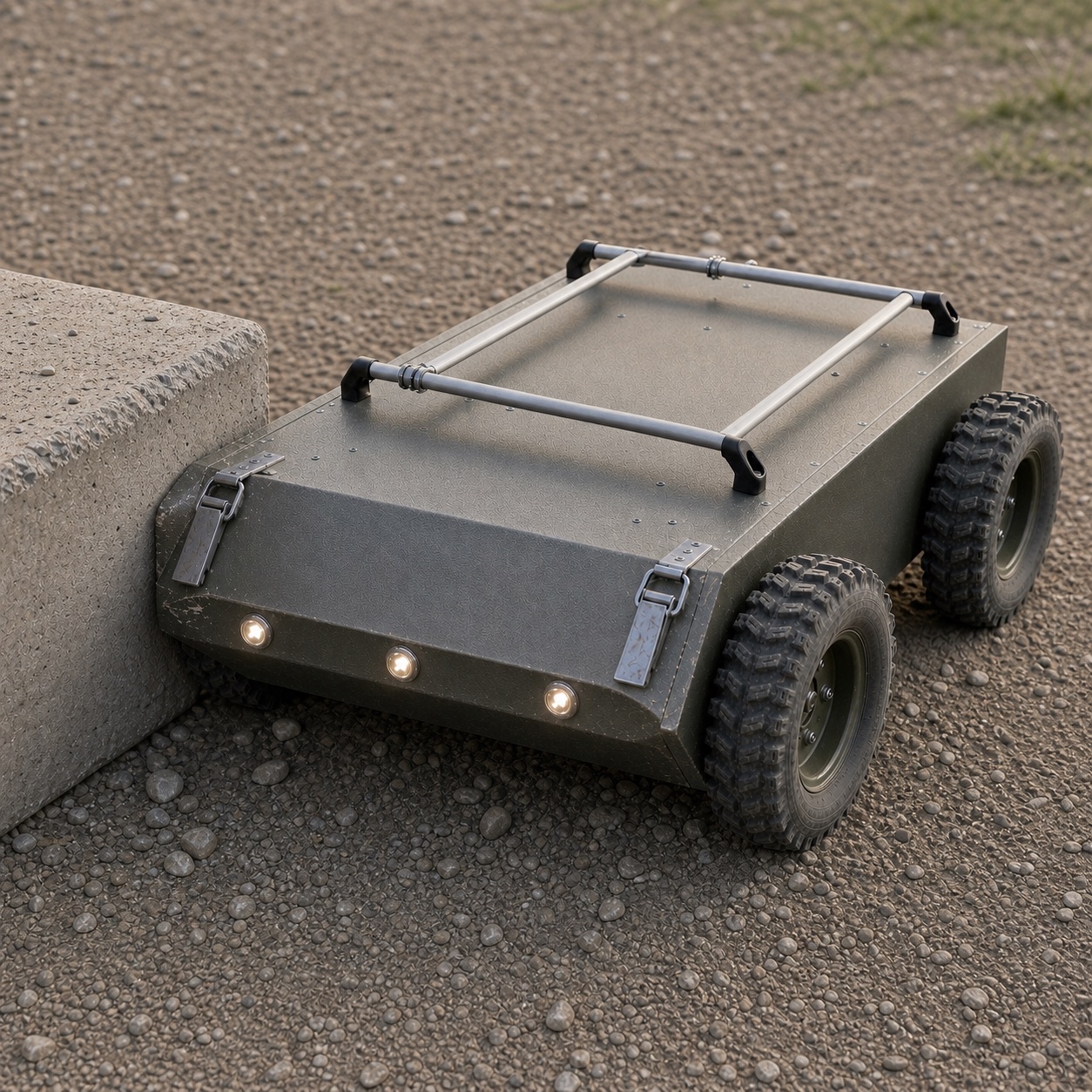
Solution overview
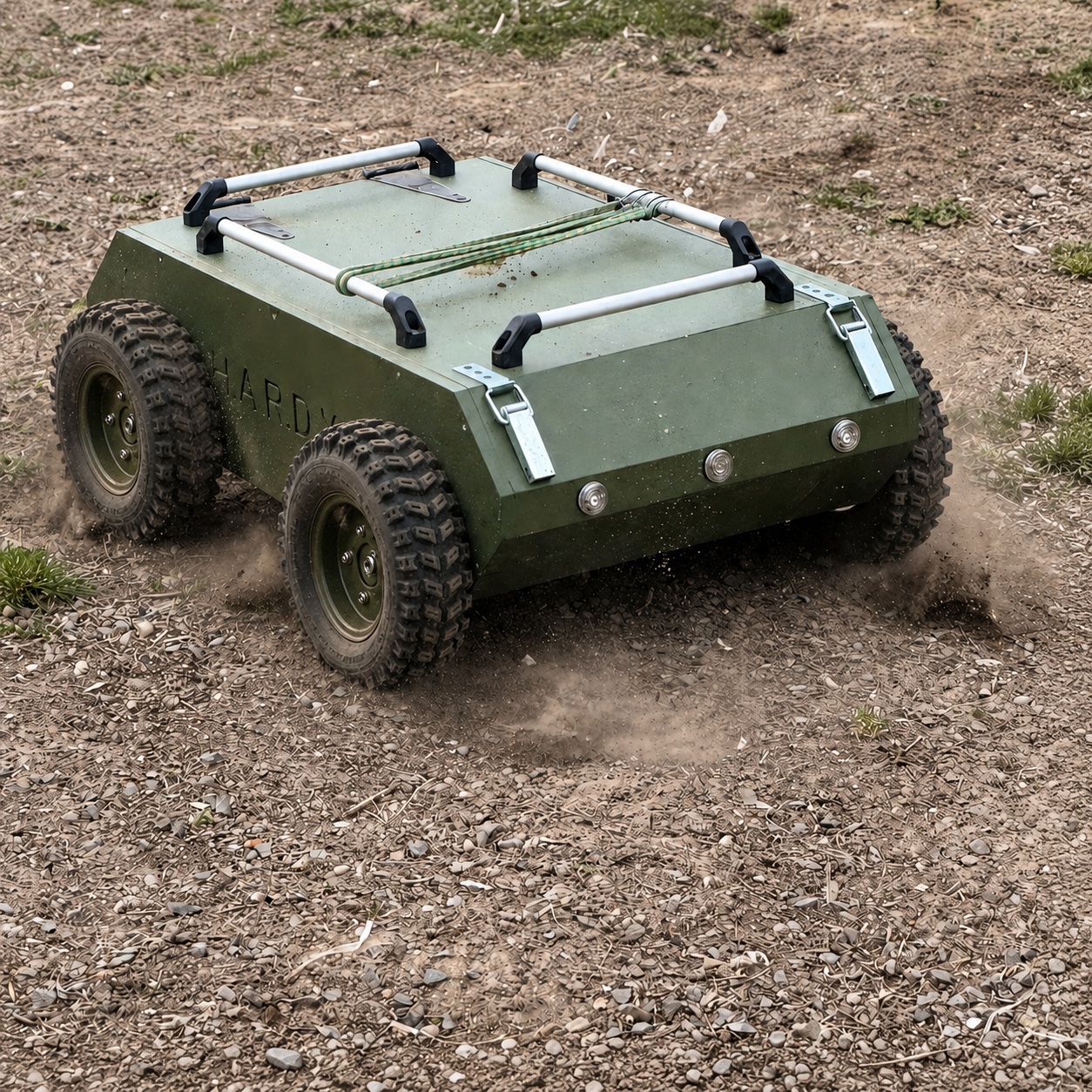
An affordable serial platform for routine logistics and first passage along a defined route: the machine takes the immediate physical risk while people remain outside the hazardous section.
Purpose
What the platform does
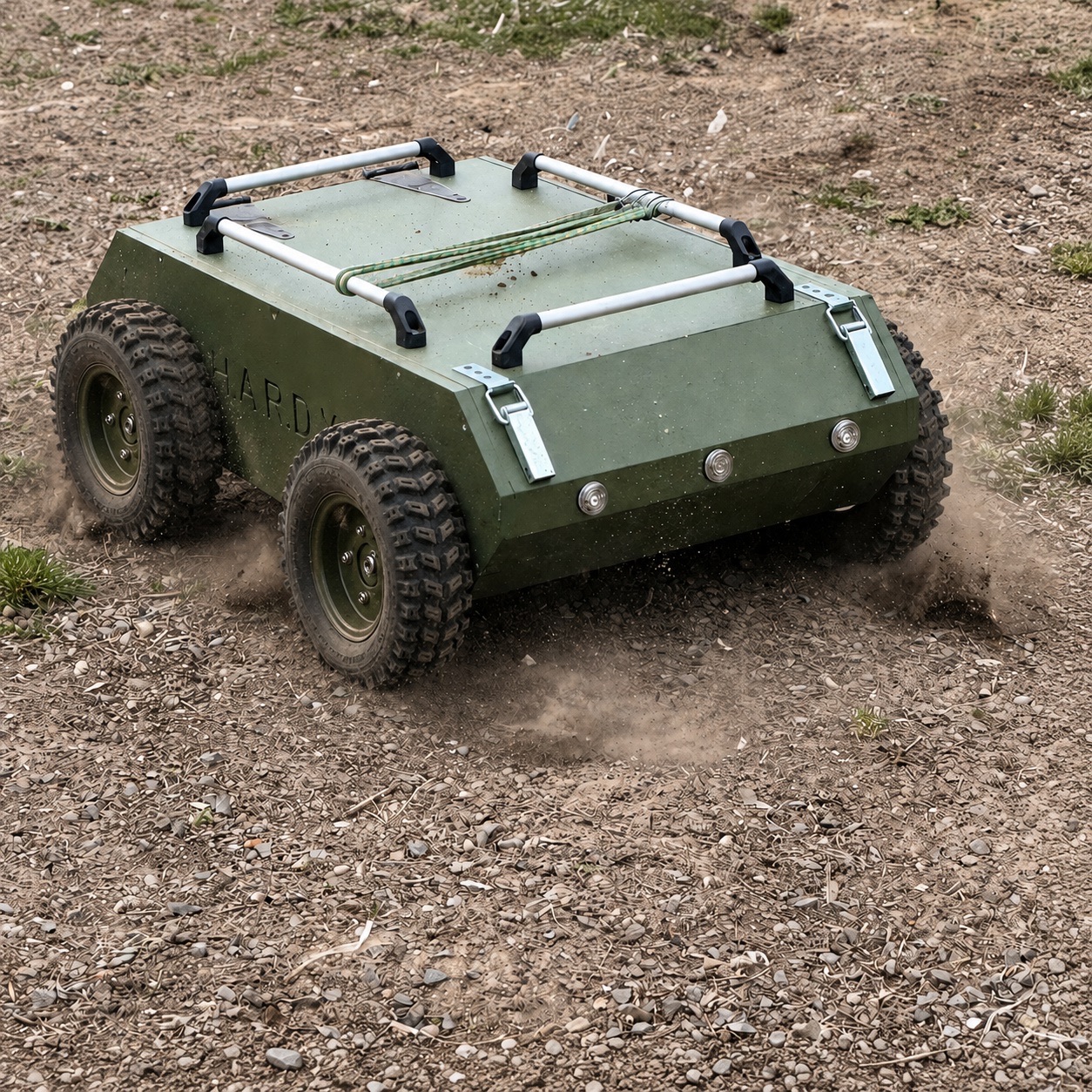
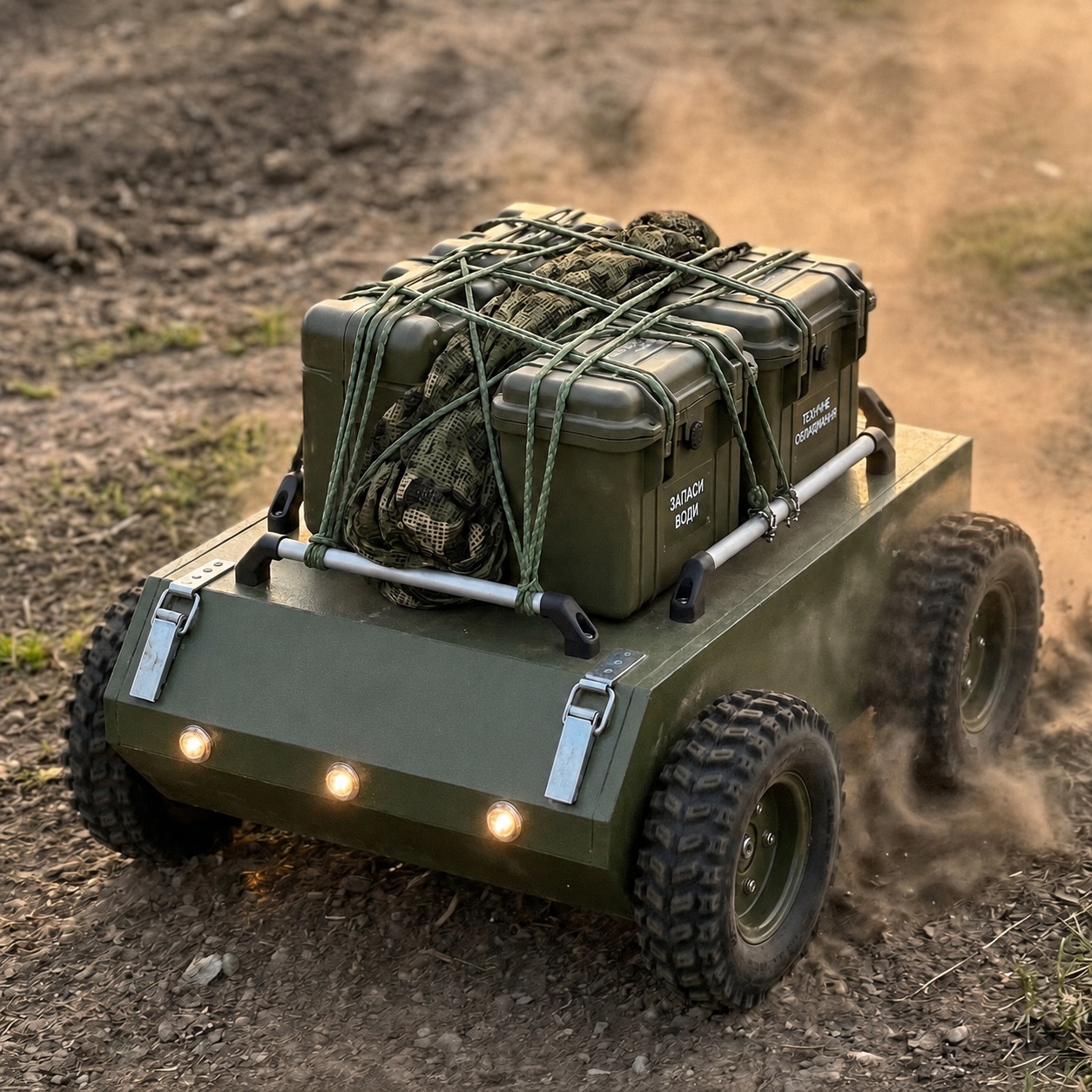
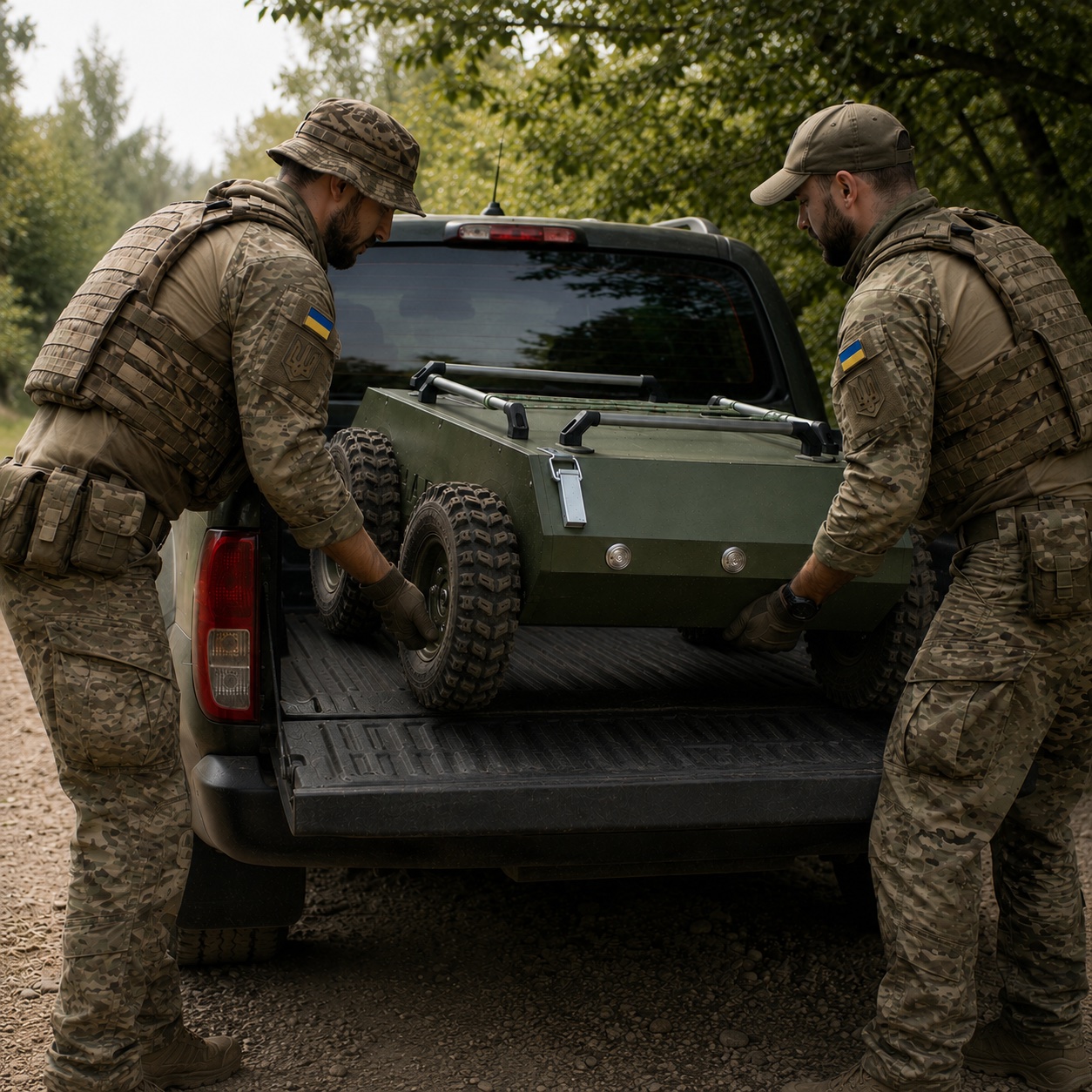
MUL carries ammunition, water, batteries, supplies and other equipment. Before personnel move, it can make the first passage along a defined potentially hazardous section.
Operational value
What the unit receives
- less physical load and fewer hazardous human movements;
- first passage before personnel move through a potentially hazardous section;
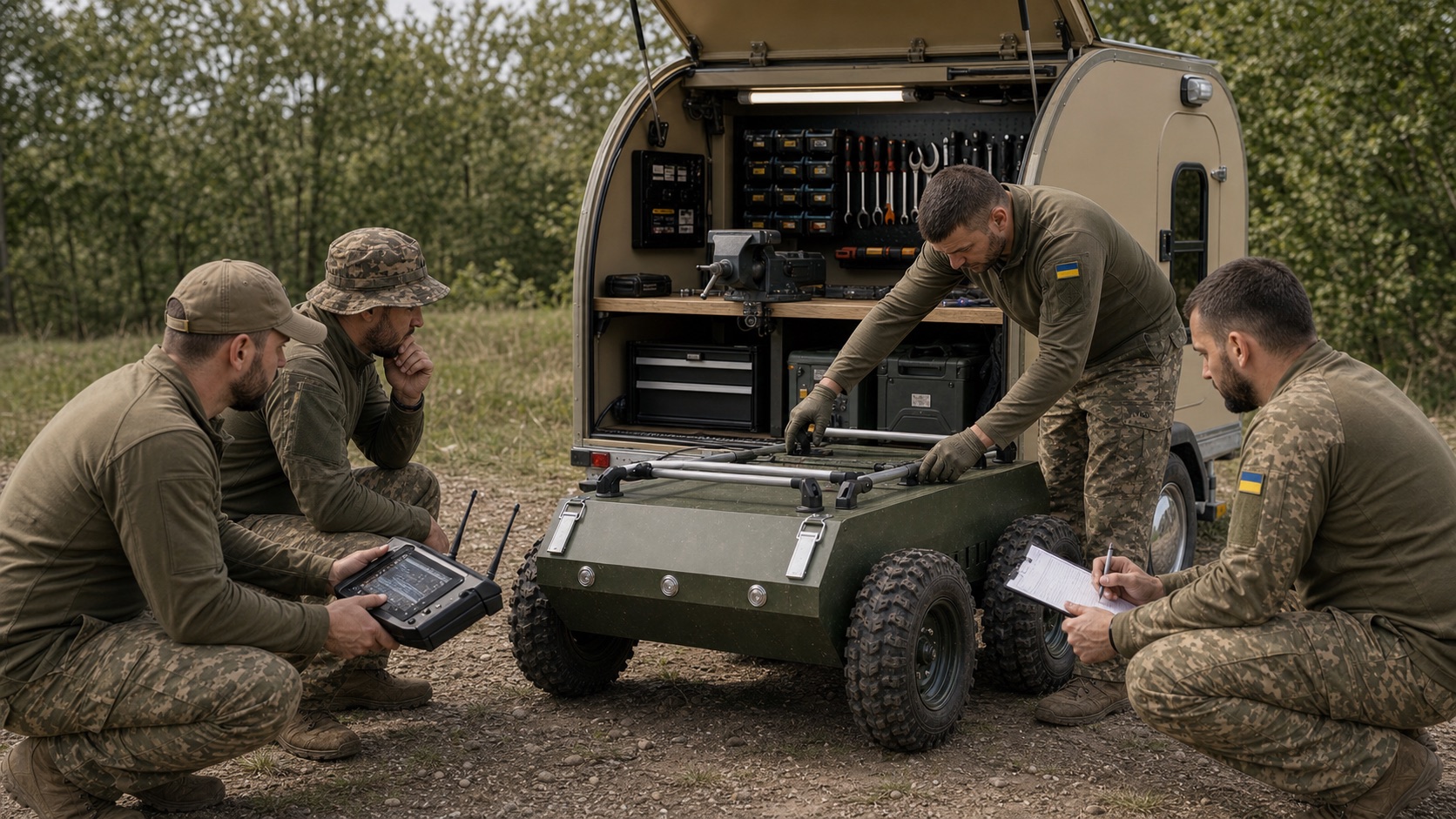
- accessible repair and replaceable composite body panels.
Mission roles
What the platform is built for
MATERIAL UNDER LOAD
HARDY MUL: evidence, calculation and a steel control
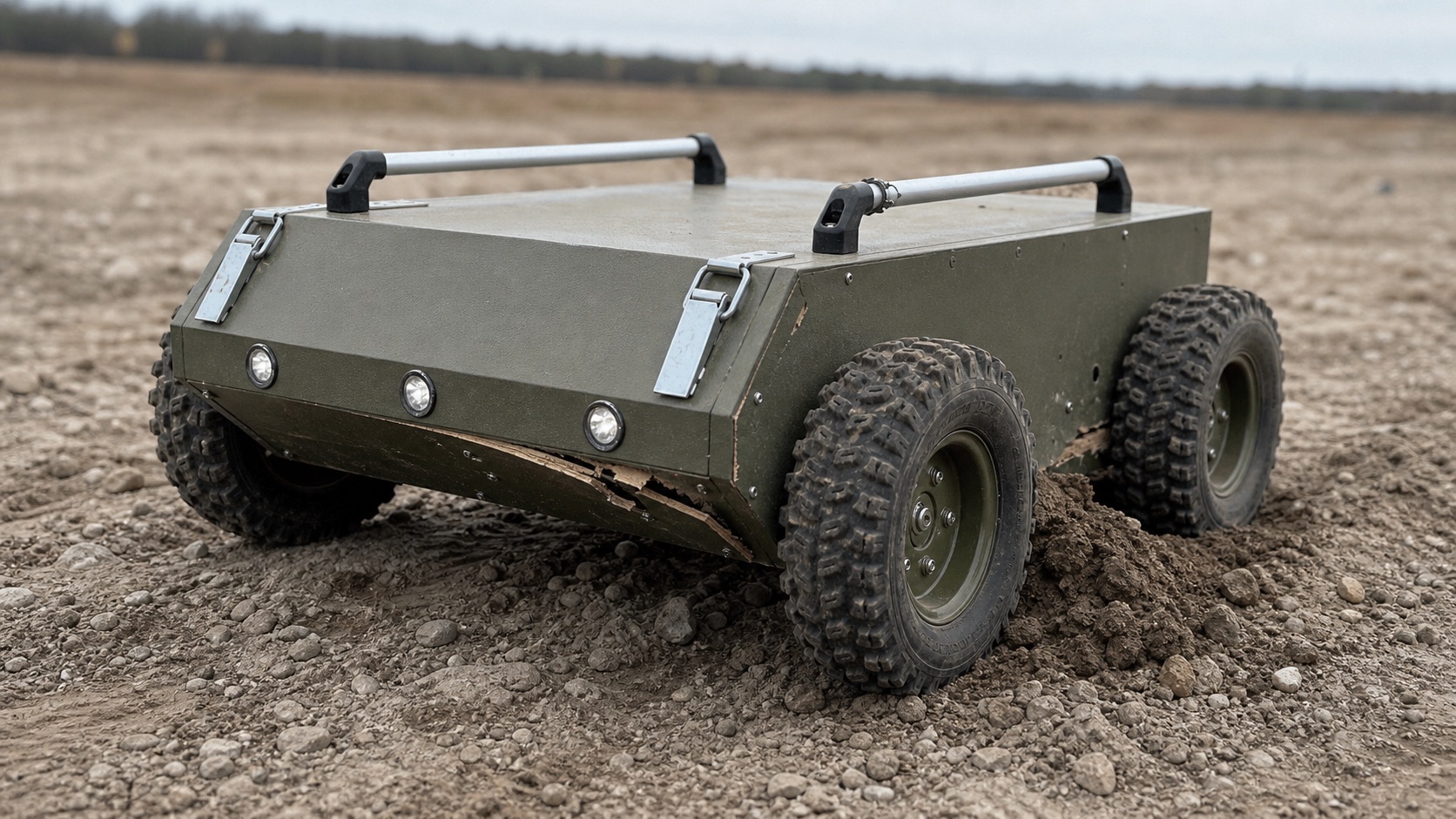
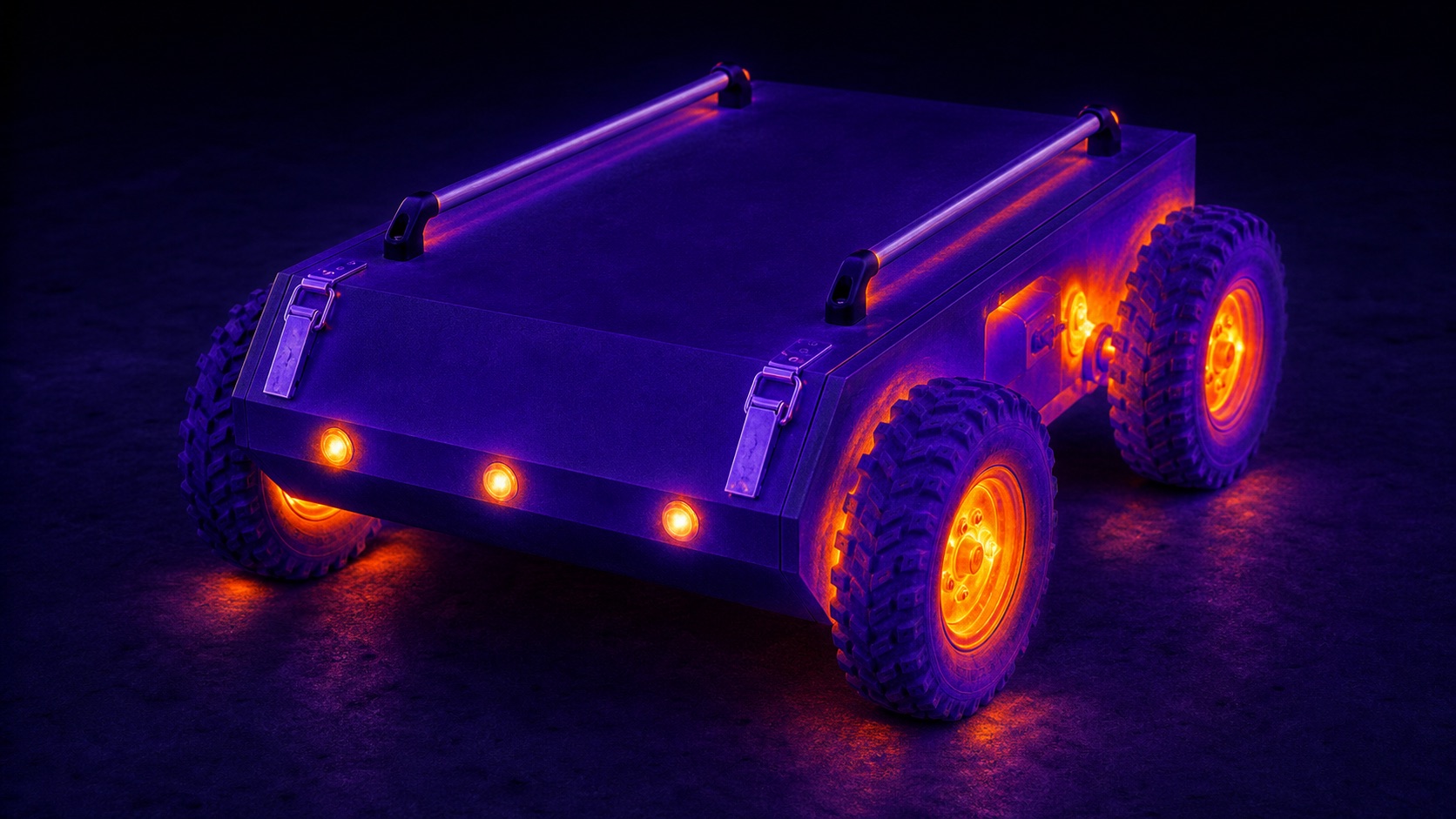
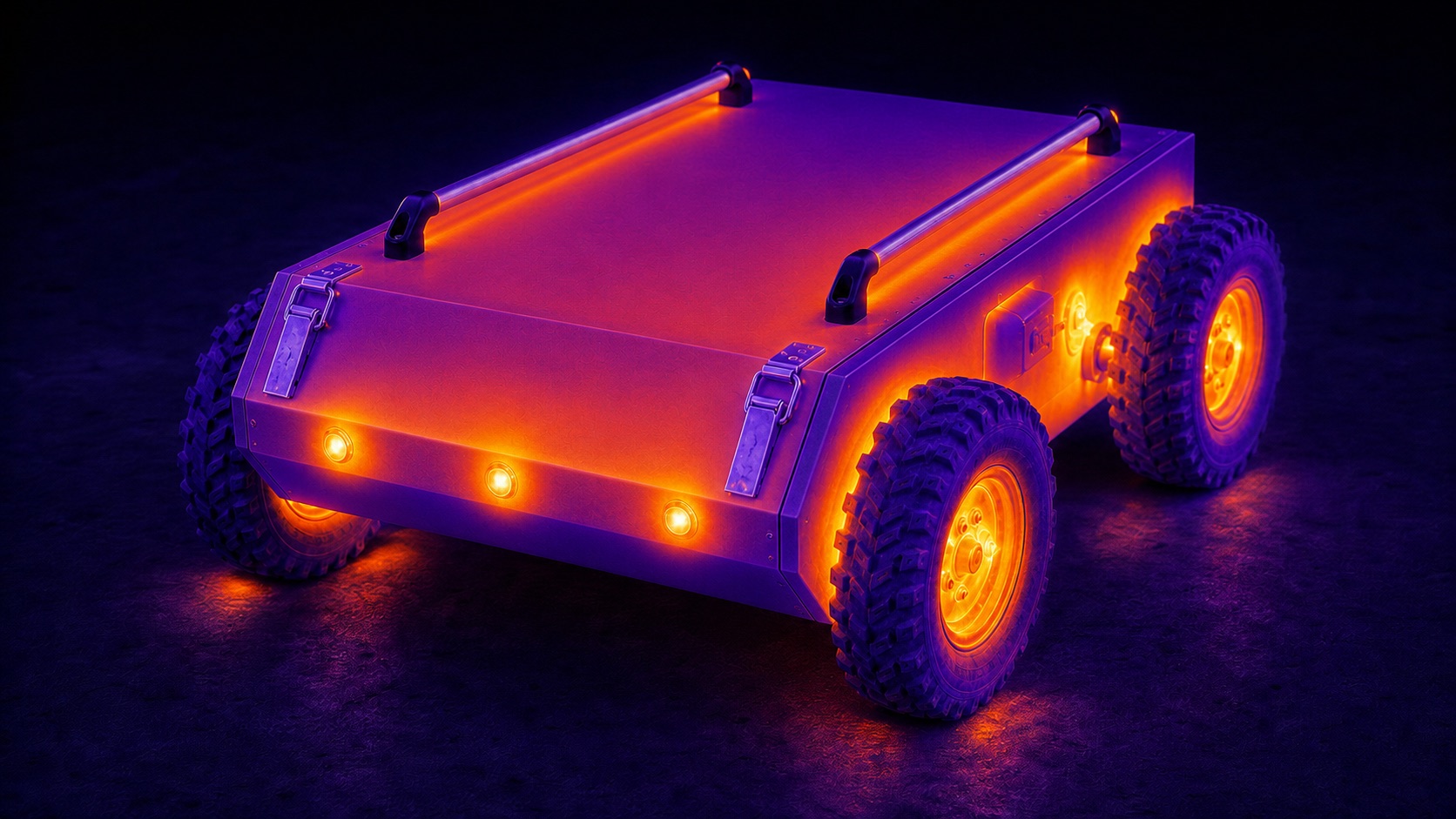
The comparison keeps the exterior geometry and load concept constant and changes only the shell material. This makes the difference in damage geometry and thermal behaviour clear and directly comparable.
Basis: ρplywood ≈ 700 kg/m³; ρsteel = 7,850 kg/m³; plywood E = 7.452–10.048 GPa; steel E = 210 GPa; λplywood = 0.147–0.175 W/(m·K); λsteel = 48 W/(m·K). E·t³ is a panel screening index only. Complete-body response depends on ribs, joints, openings, supports, speed, mass, contact geometry and duration.
How damage starts and propagates
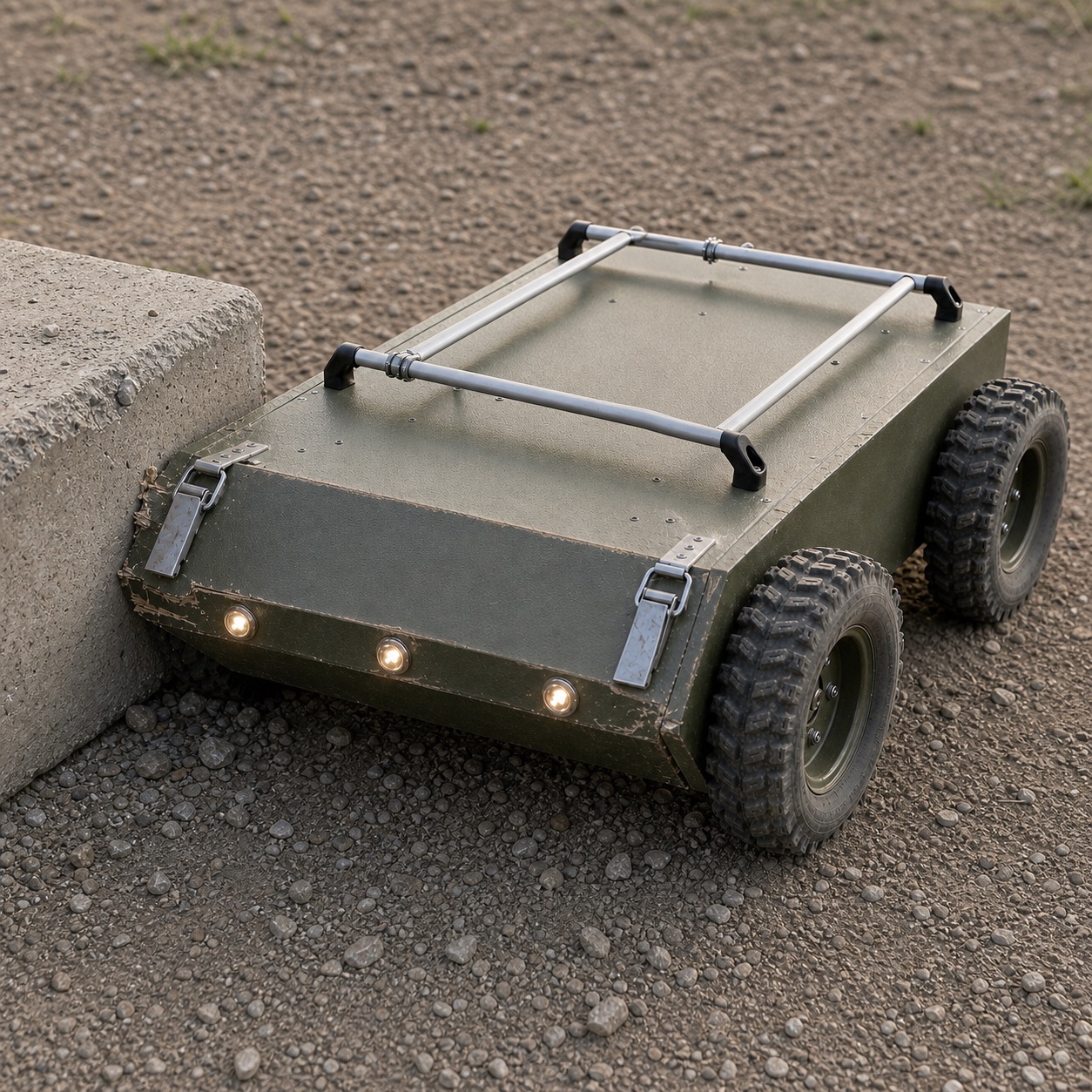
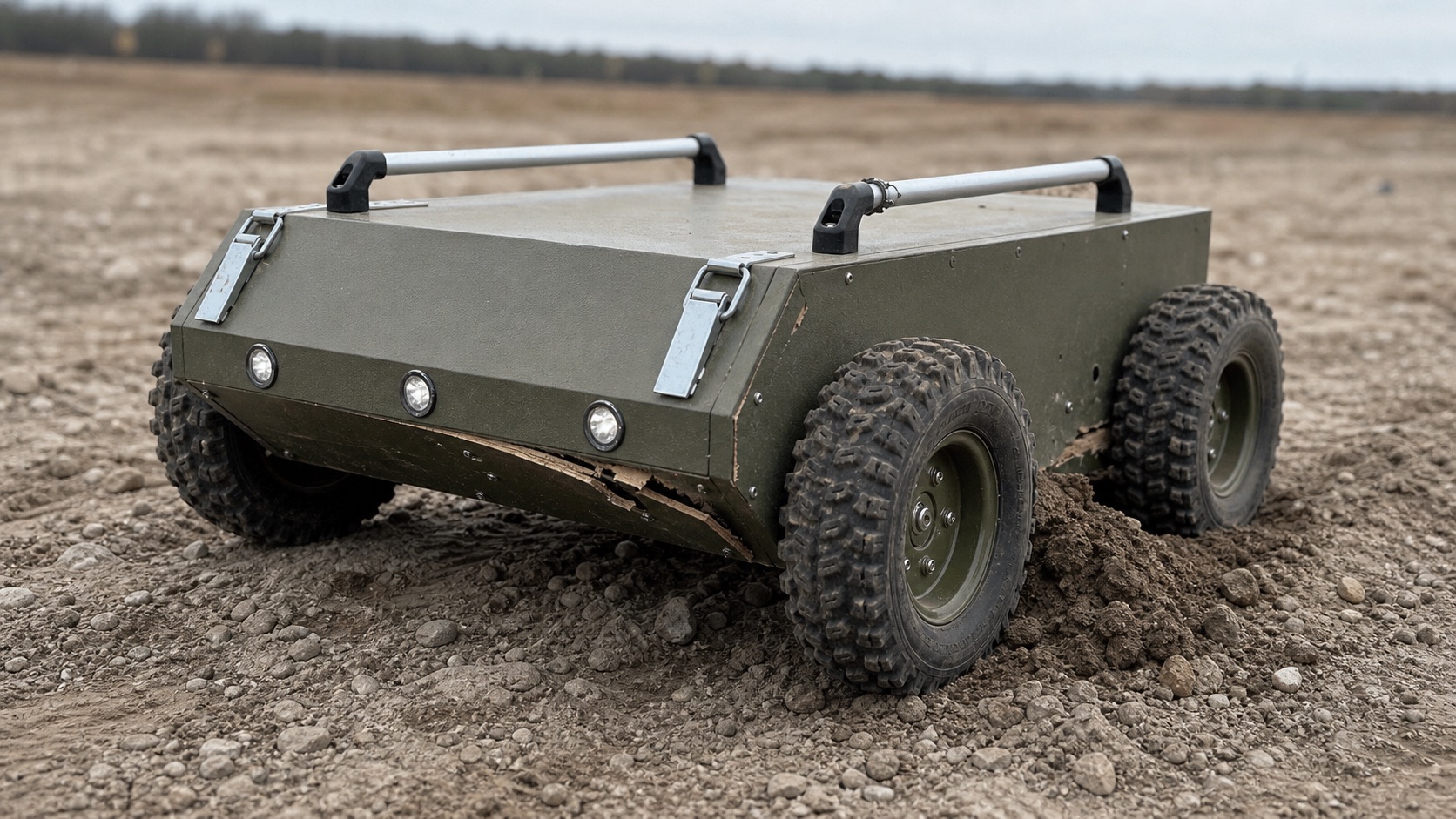
The compact MUL box acts as both load-bearing and cargo structure. In a collision, the plywood panel is expected to show local crushing and edge chipping; the steel control shows a dent and plastic fold.
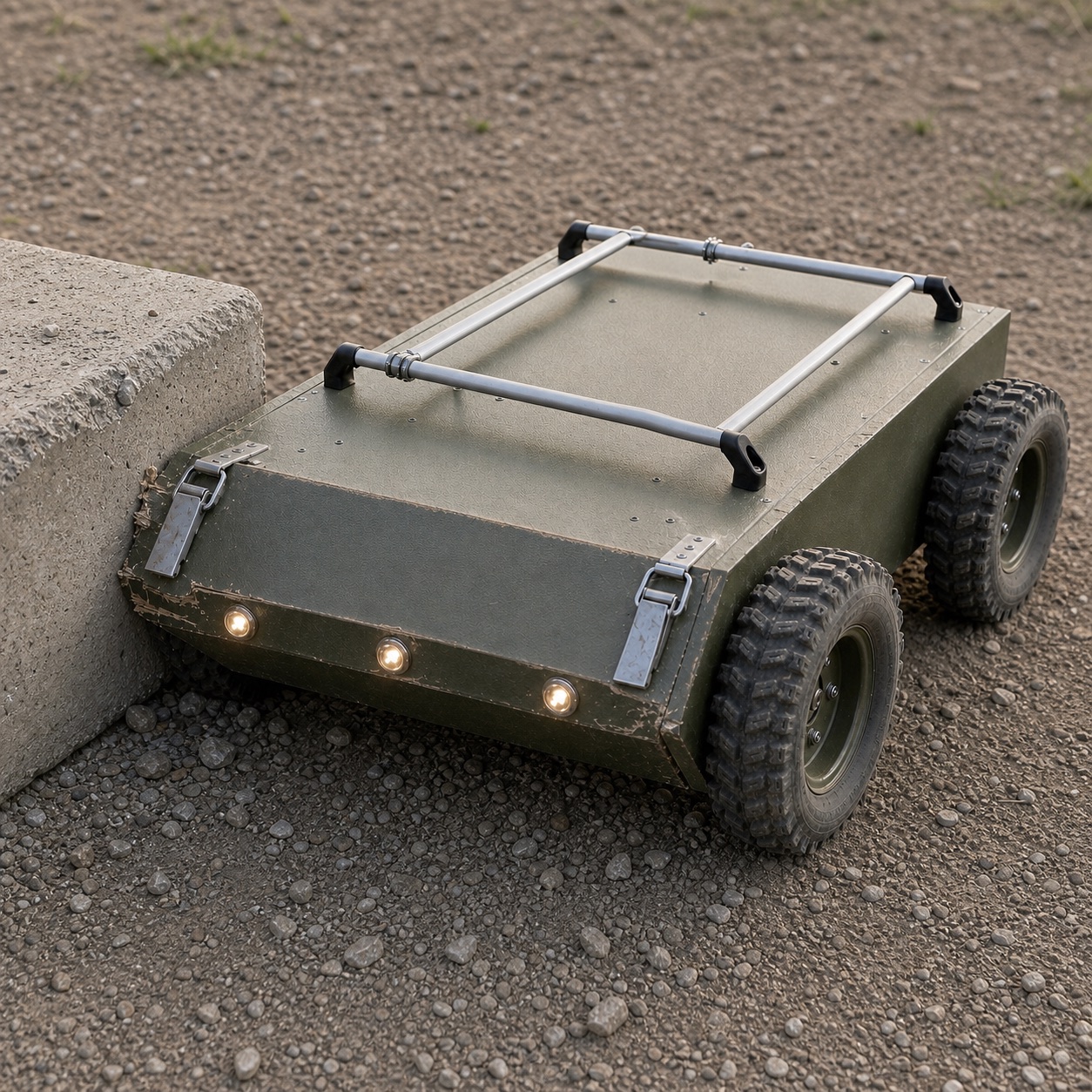
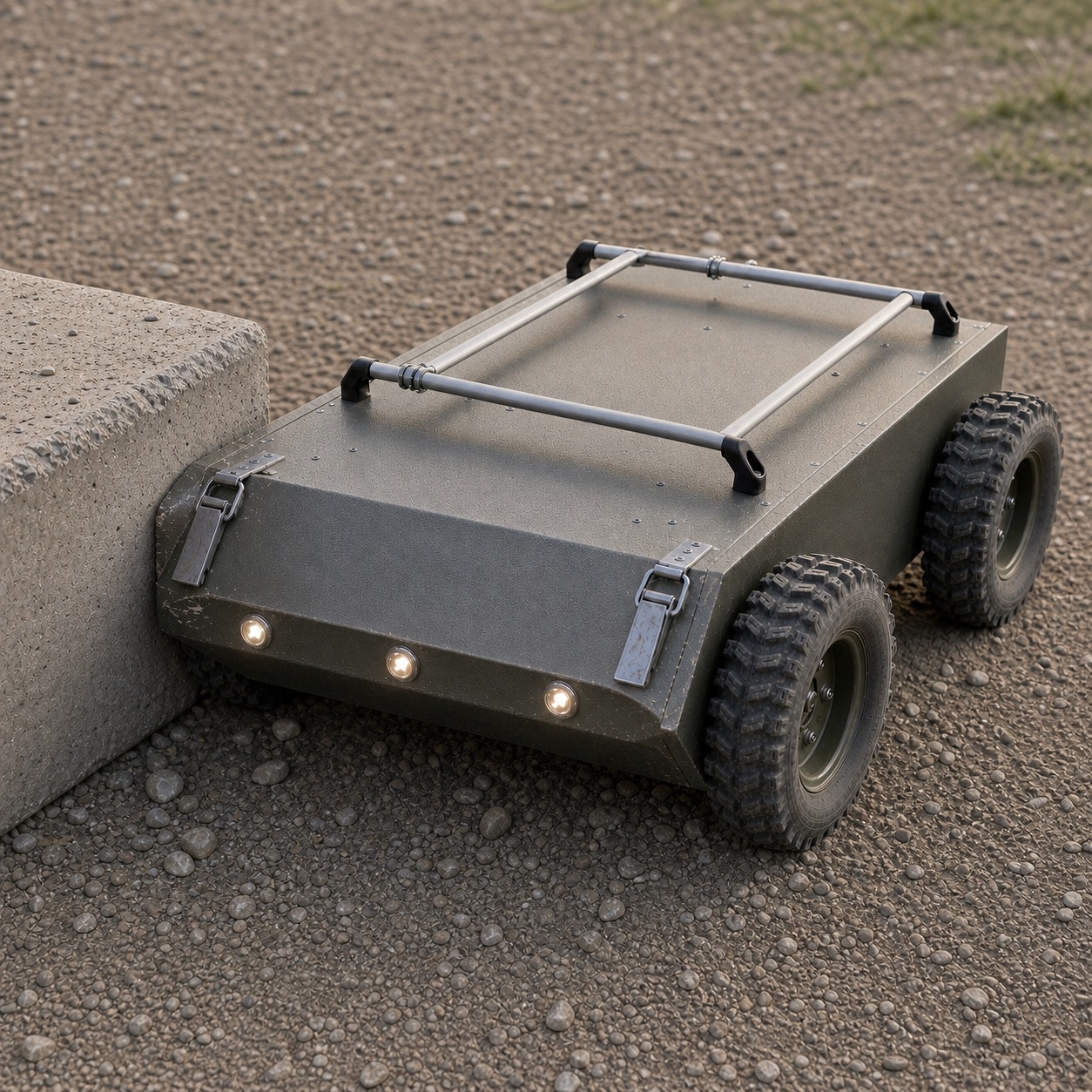
The event ends; the inspection begins
The compact shell shortens the load path to ribs and angle joints. After an impulse, drive mounts, battery supports, chains and cargo-deck geometry are inspected first.
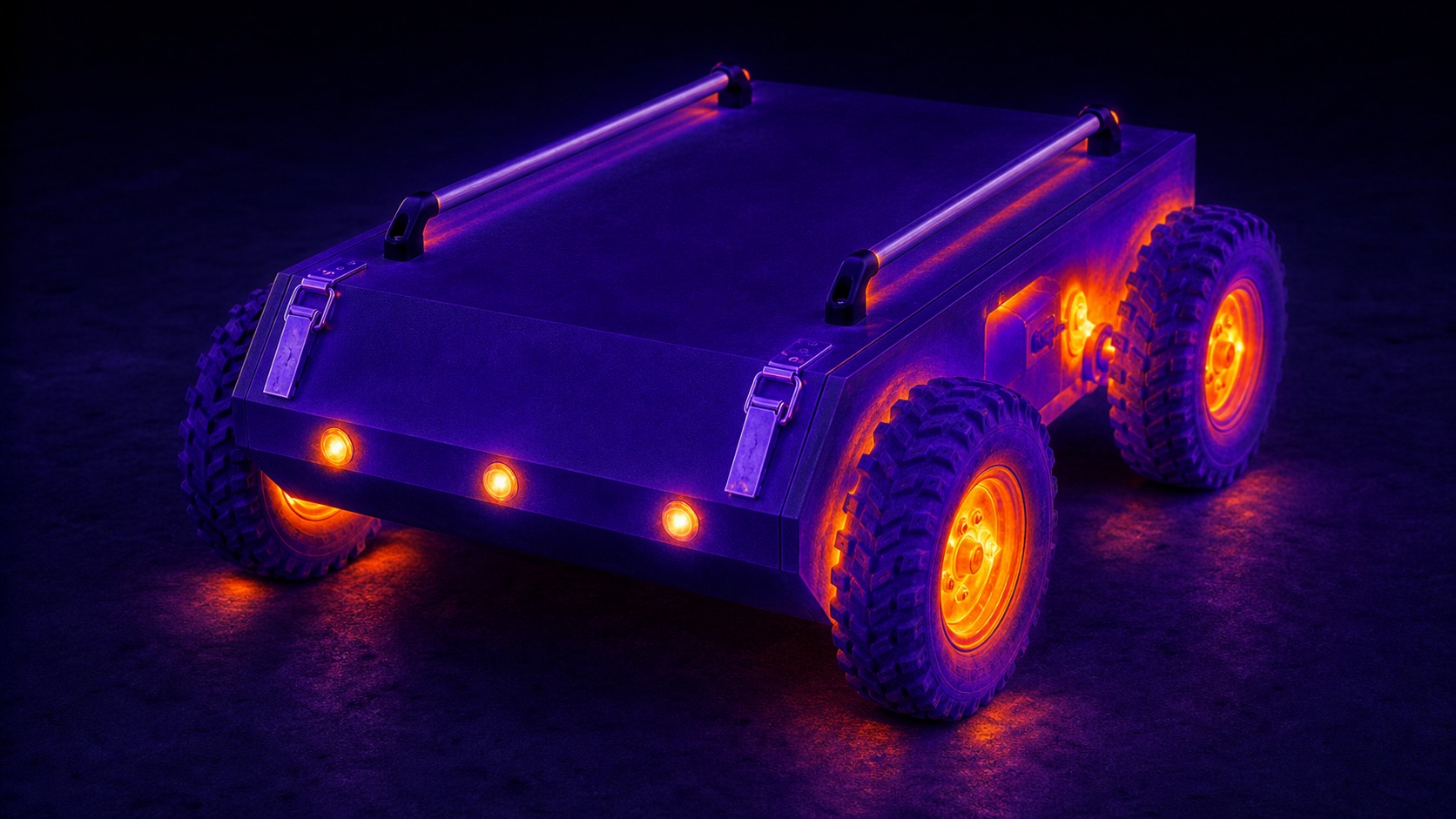
Identical heat sources; different shell response
Compact packaging brings heat sources closer together. The thermal map guides ventilation and separation of batteries, controllers and drive units.
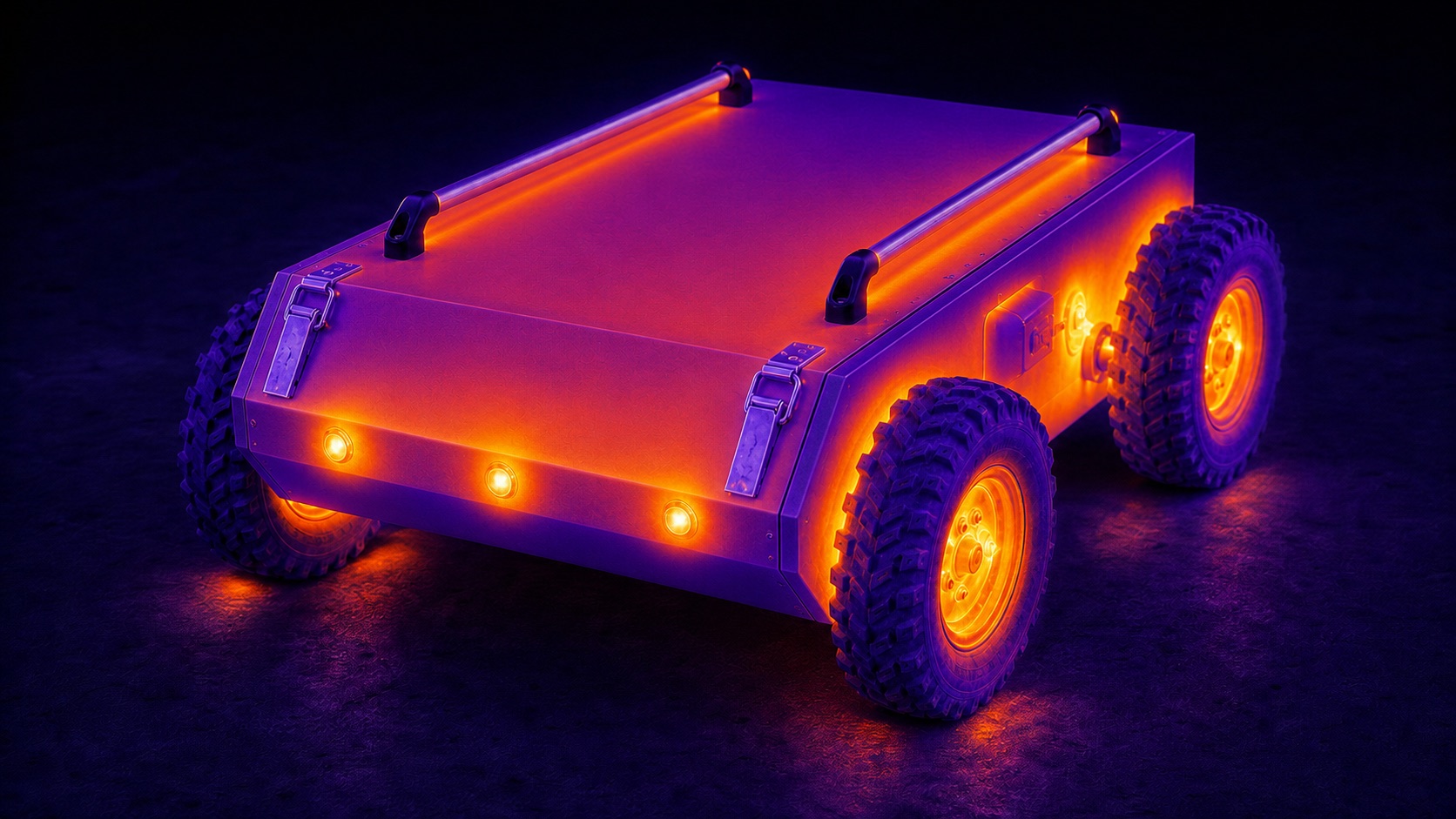
What happens as the load increases
Plywood does not make the vehicle indestructible. Its practical value is that damage can remain visible, local and repairable before the load reaches critical joints or internal equipment.
Surface trace
Raptor-coating abrasion, scratches and a shallow edge mark. Geometry and function remain unchanged.
Local crushing
Veneer compression, a small layered chip or short delamination near the contact or fastener. Inspection and a local repair are required.
Joint displacement
A joint can open, an angle connector can deform, or a fastener can pull through. Alignment, drive mounts and retained equipment must be checked.
Functional failure
At higher energy the panel or rib can fracture, equipment can shift and mobility can be lost. The damaged module must be replaced; no protection claim is implied.
The transition points depend on mass, actual speed, angle and area of contact, support conditions, moisture, manufacturing quality and the final configuration. They must be established by instrumented tests for each model.
STRUCTURAL ARCHITECTURE
A plywood monocoque, not decorative cladding
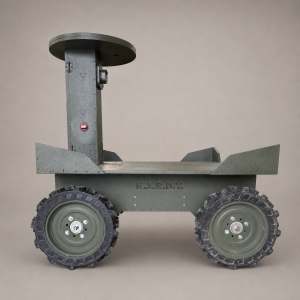
The current HARDY body is a load-sharing plywood box with plywood stiffening ribs, 3 mm steel angle connectors, industrial bearings and local metal interfaces. Its performance comes from the closed geometry, rib spacing, joints and quality control — not from a claim that plywood is equivalent to armour steel.
Open the calculations, thermal-imaging analysis and source data →
Характеристики та комплектація
Технічні параметри
Базові параметри
- Робоче навантаження
- до 80 кг
Привід, колеса та енергетика
- Електродвигуни
- 2 × 800 Вт BLDC; 1600 Вт сумарно
- Привід
- незалежний ланцюговий привід кожного борту
- Колеса
- 4 безповітряні непробивні колеса
- Кліренс
- 150 мм
- Енергетика
- тяговий акумулятор і зарядний пристрій у базовому комплекті
Керування та оснащення
- Базове керування
- комплектний радіопульт у межах прямої видимості
- Автономна навігація
- не входить до базової комплектації
- Вантажна зона
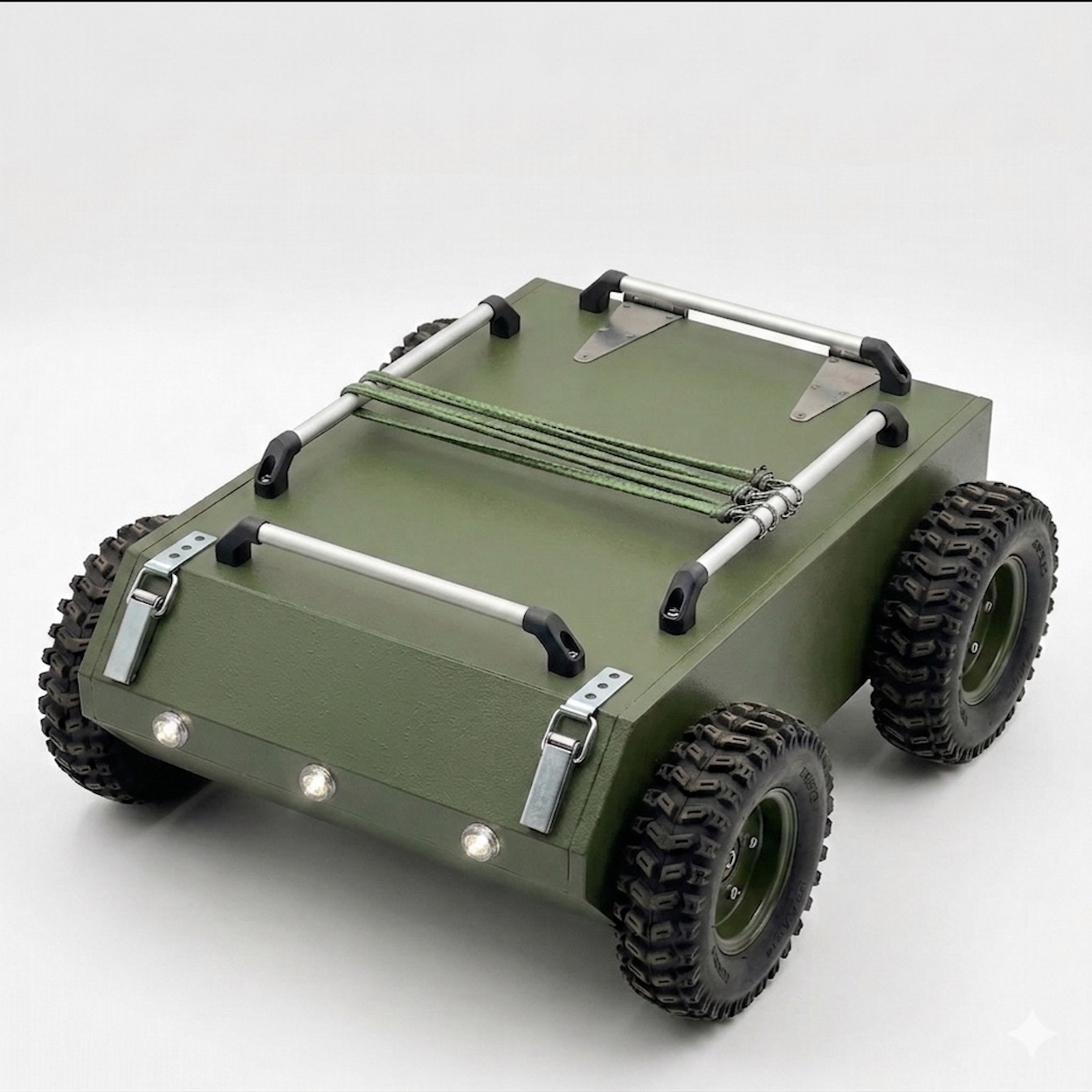
- верхня платформа з рейлінгами для фіксації майна
Корпус та польовий сервіс
- Матеріал
- промисловий фанерний композит
- Захист поверхні
- полімерне фактурне покриття
- Ремонт
- локальний ремонт або швидка заміна корпусних панелей
Потужність та базове оснащення
- Сумарна потужність приводів
- 1600 Вт; 2 × 800 Вт BLDC
- Зарядний пристрій
- У базовому комплекті
- Радіопульт
- У базовому комплекті
Ready package
What is included
ready MUL platform with cargo rails;
radio controller and configured command link;
traction battery and charger;
configuration data sheet, operator onboarding and mission checklist.
Delivery data sheet
Parameters fixed before order
Before delivery, the MUL data sheet records exact serial dimensions and mass, battery set and capacity, charging time, speed, actual control range, loss-of-link behaviour, temperature range, ingress protection and acceptance results for the defined obstacles and payload.
Delivery and support
Commercial terms
Across Ukraine; carrier tariff applies, typically from UAH 200.
12 months for the serial product; service scope and timing are fixed in the delivery documents.
14 days for a standard product under the published policy; configured products follow agreed terms.
Completeness check, functional test, configuration data sheet and operator onboarding.
Intended users
Who it is for
Logistics and engineering teams, units changing positions, defence foundations and volunteer supply programmes.