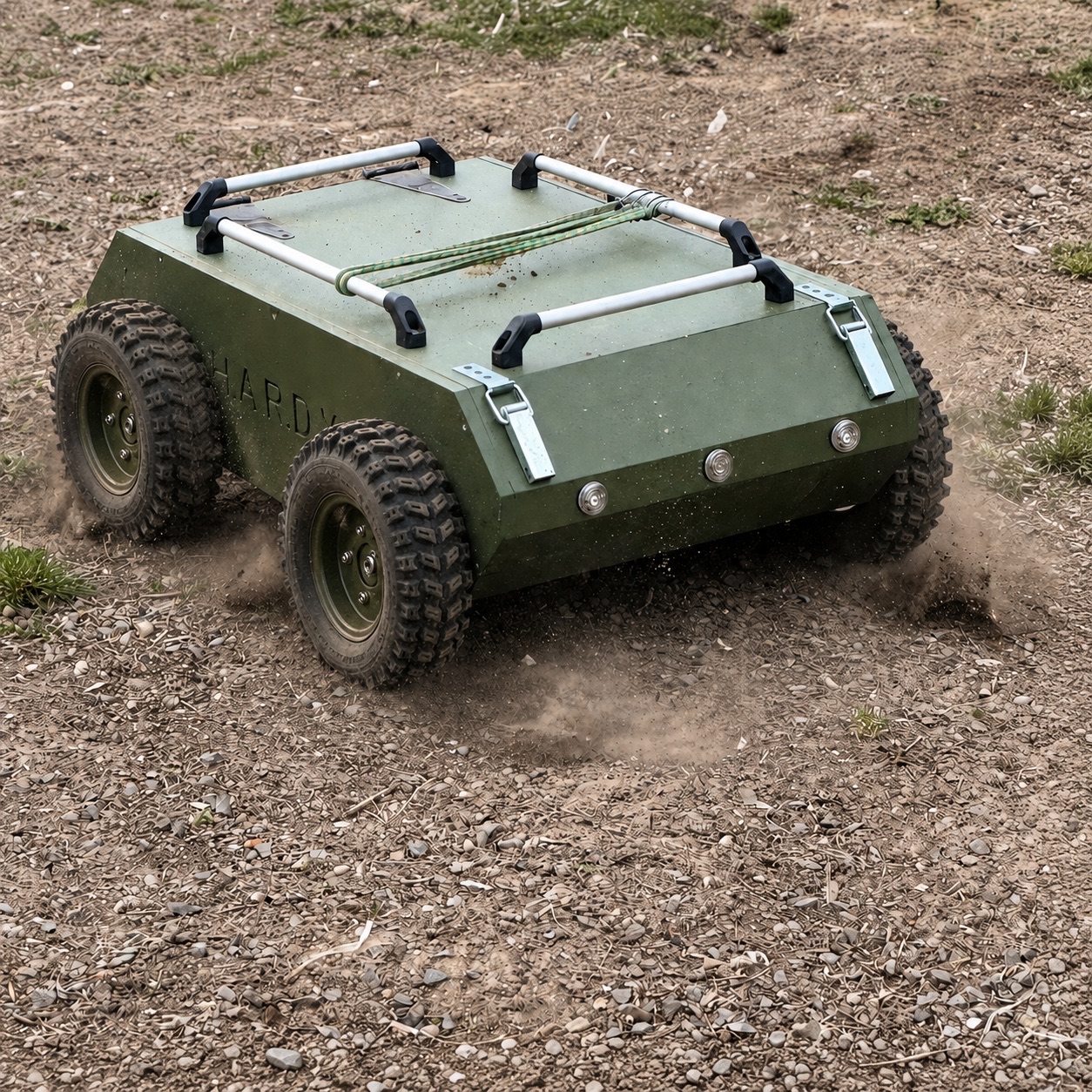
Robotic evacuation support helps move a person away from a hazardous area while reducing the number of people who must physically enter the route. The value is a controllable cycle: preparation, loading, movement, operator oversight and handover at a safer point.
Mission value
Every additional person on a hazardous route increases total exposure. A ground platform carries the physical load, while smooth motion, secure restraint and practical access help the team act quickly and confidently.
The HARDY solution
HARDY builds an evacuation configuration on the appropriate platform with a restraint module, controlled speed, clear operator controls and a field-serviceable architecture. The configuration is shaped around the actual route and user workflow.
What the user gains
For the unit, the configuration provides:
fast preparation, loading and unloading with fewer steps;
stable and smooth movement over agreed obstacles and speeds;
clear control, accessible emergency stop and manual recovery.
Products and training
Base platforms for evacuation support
ARGUS and MUL provide two size and budget foundations. The module is aligned with route, restraint and unit workflow.
Recommended products
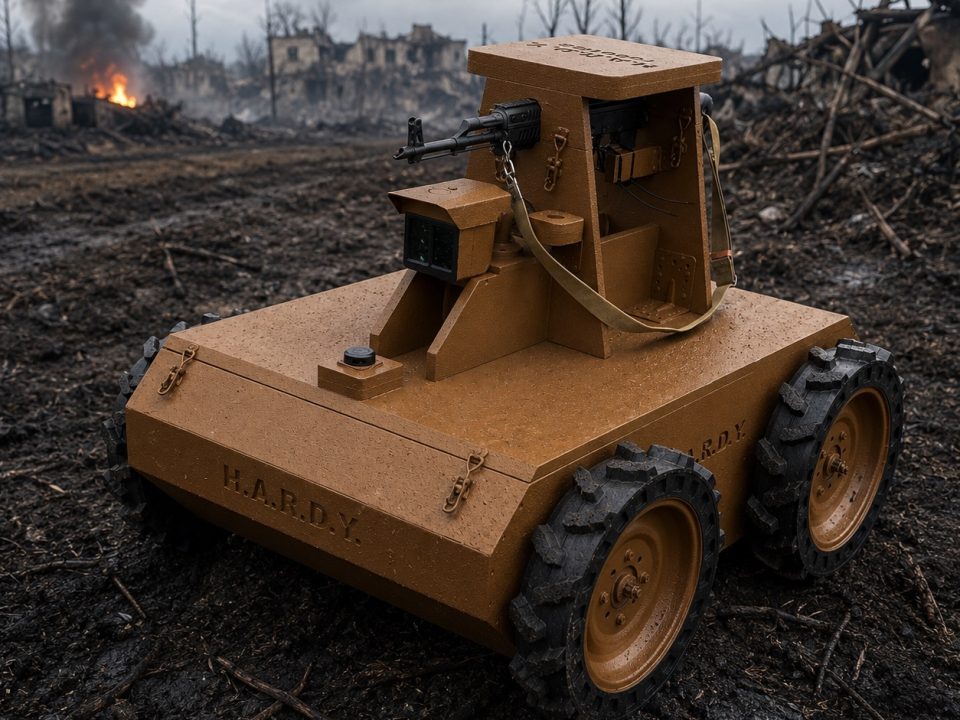
HARDY ARGUS
Heavy modular UGV for ISR, logistics, route missions and remotely controlled mission payloads.
200 000 ₴Product details →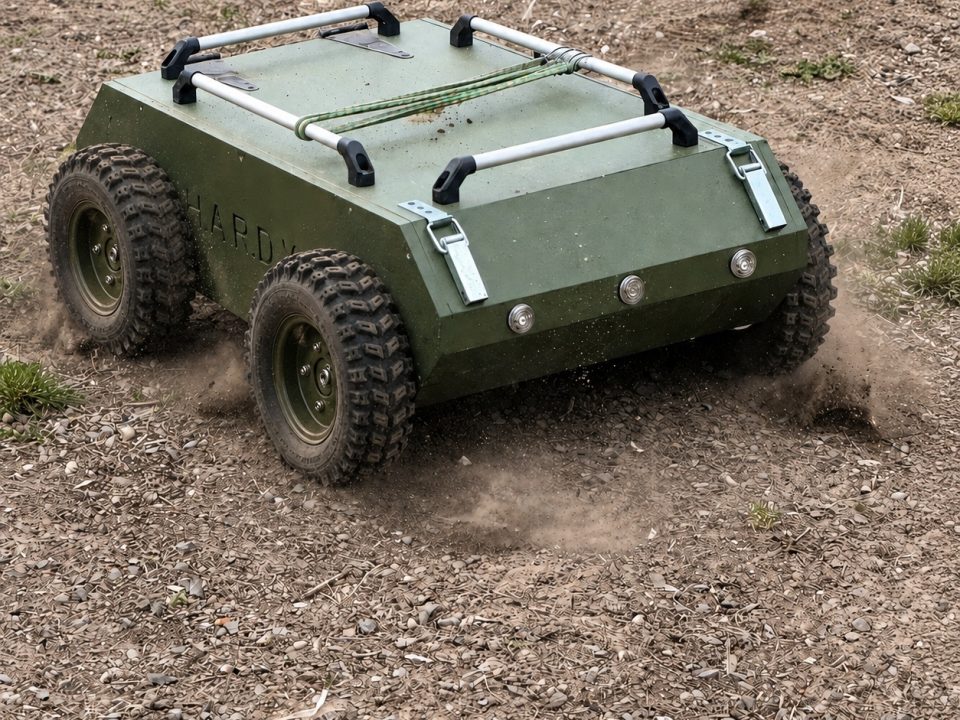
HARDY MUL
Compact logistics UGV for routine delivery and first-pass route risk reduction before personnel move.
80 000 ₴Product details →Available configurations
Evacuation module
Placement and restraint system on the appropriate base platform.
Motion control
Speed limit, smooth start and accessible emergency stop.
Preparation package
Checklists, operator training and a practical handover scenario.
Recommended training
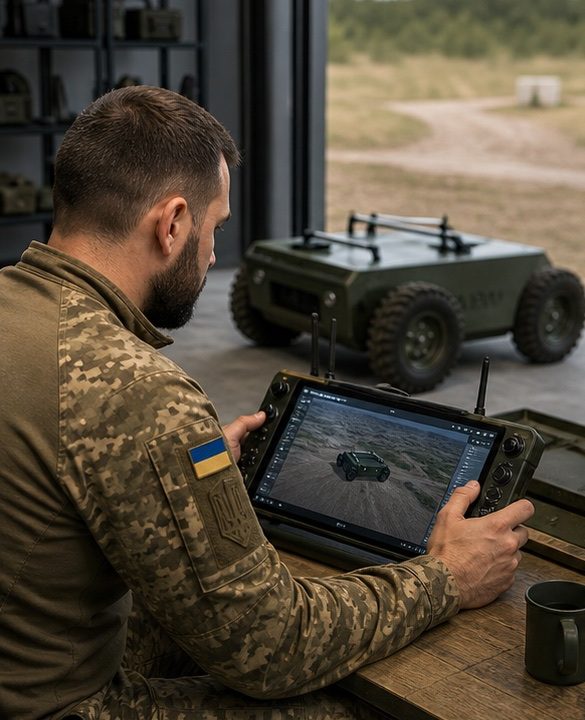
UGV Operator Fundamentals
Онлайн-курс оператора НРК: 10 модулів і 40 уроків про будову системи, підготовку, безпеку, навчальні завдання та перевірку результатів. Власний темп, тести й робочі матеріали.
2 400 ₴Course details →
UGV Mission Planning
Turn a task into a route, roles, success criteria, contingencies and an after-action review.
3 200 ₴Course details →Next step
Choose a ready offer or send a technical brief.
For a ready solution, we will confirm the package, quantity and delivery path. For a different task, we will review the brief and propose the next engineering step.