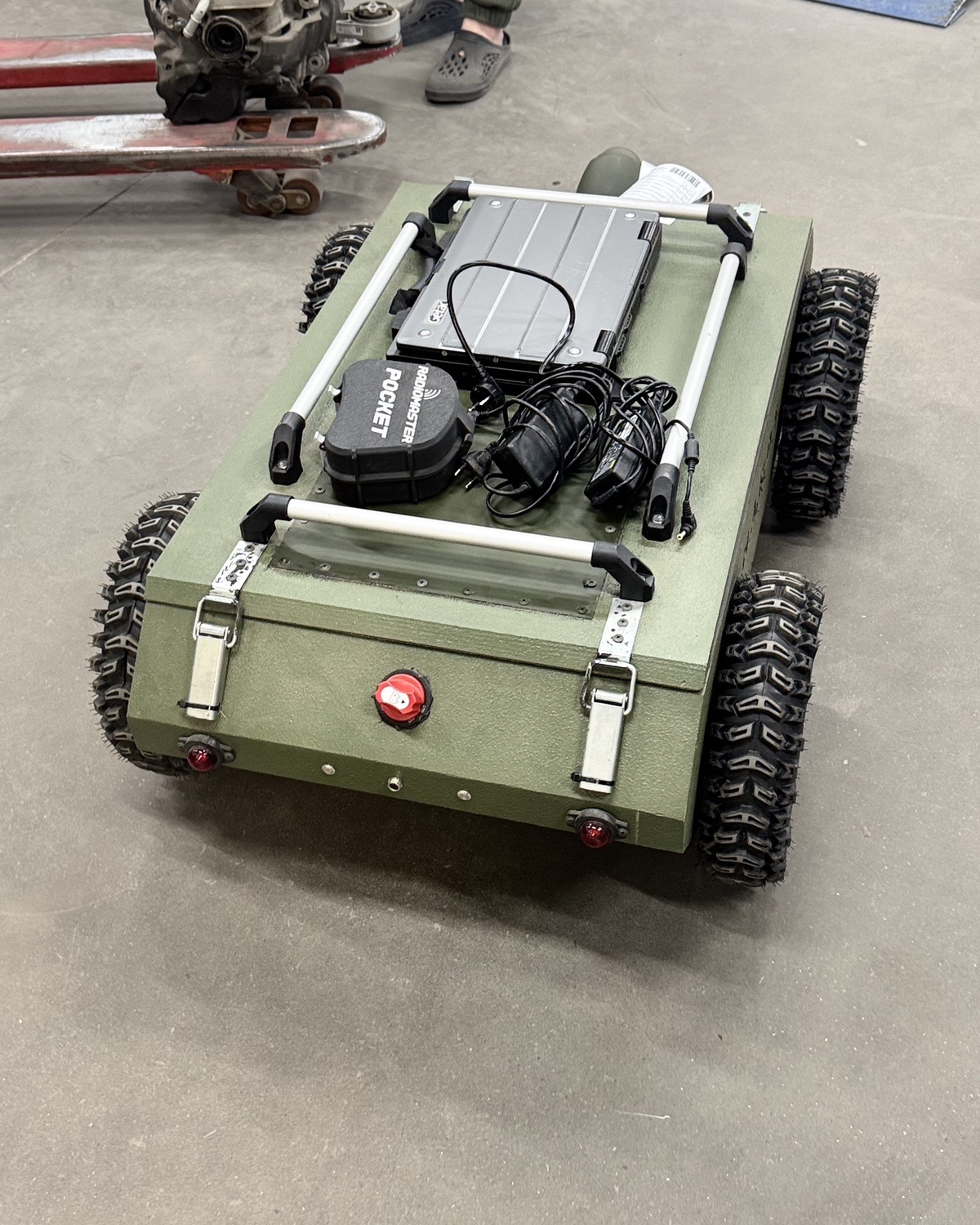
Mission economics compares platform, preparation, repair, logistics and loss costs with useful tasks completed. It helps avoid both unsafe cost cutting and over-engineering.
Why it matters
Based on statistics HARDY uses as a design premise, the average battlefield lifecycle is 3–5 missions. Actual life depends on task, conditions and damage; this is not a warranty or universal benchmark.
The HARDY solution
Design budget is directed toward functions that improve task completion: drive, energy, communications, sensors, payloads, repair and repeatable production.
What the customer gains
A useful calculation needs a defined scenario and explicit assumptions.
configuration and preparation cost;
cycle, failure, repair and return-to-service data;
cost per useful completed task, not purchase price alone.
Next step
Let us discuss your task
Describe the mission and cost structure to compare.